
Stainless Steel or Cast Iron: What's the Difference and What Should You Choose?
Intro
Stainless steel (inox) and cast iron are both durable, chemical-free materials for pots and pans — but they perform fundamentally differently. In this blog we outline the differences, so you can make the right choice for your kitchen.
Heat distribution
Haute Cuisine stainless steel cookware is usually built with a 3-layer base: stainless steel on the outside and inside, with an aluminium core. Aluminium conducts heat quickly, while the stainless steel layers provide durability and hygiene. This means the pan heats up quickly and evenly, without hot spots.
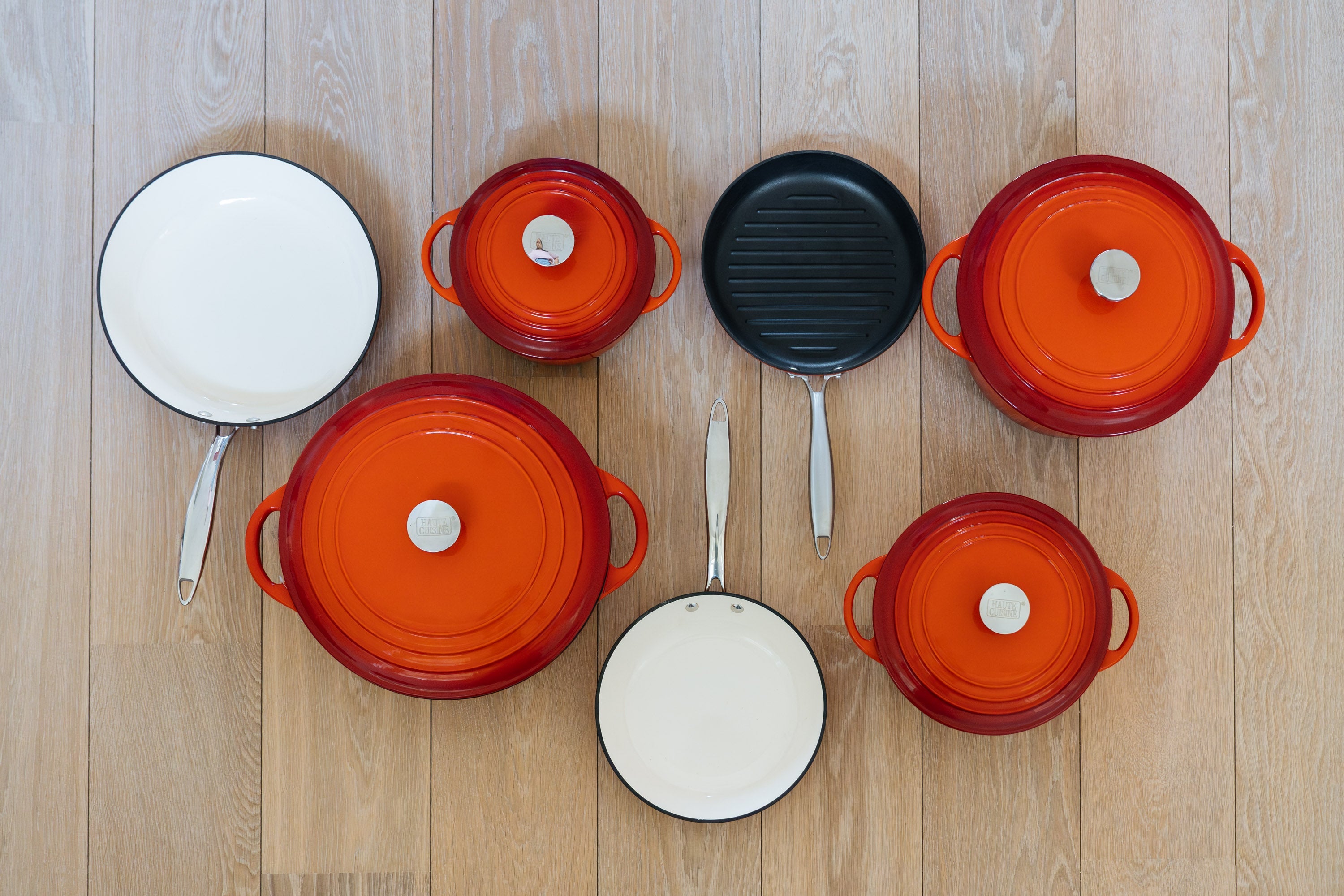
Cast iron heats up more slowly than stainless steel, but retains heat much longer and distributes it extremely evenly. That makes it ideal for slow cooking, simmering and searing.
Weight and maintenance
- Stainless steel: lighter, easy to clean, dishwasher-safe (depending on the model), no seasoning needed.
- Cast iron: heavier, requires hand washing and periodic oiling (seasoning) to maintain the natural non-stick layer.
Use
- Choose stainless steel for: everyday cooking, sauces, soups, pasta — fast and precise temperature control.
- Choose cast iron for: stews, roasts and dishes that can simmer for hours — maximum flavour retention.
Suitable for induction?
Both stainless steel and cast iron cookware from Haute Cuisine are suitable for all heat sources, including induction.
Conclusion
There's no single right answer — stainless steel and cast iron complement each other. For a versatile home kitchen, a combination of both is the ideal foundation.
Discover the range
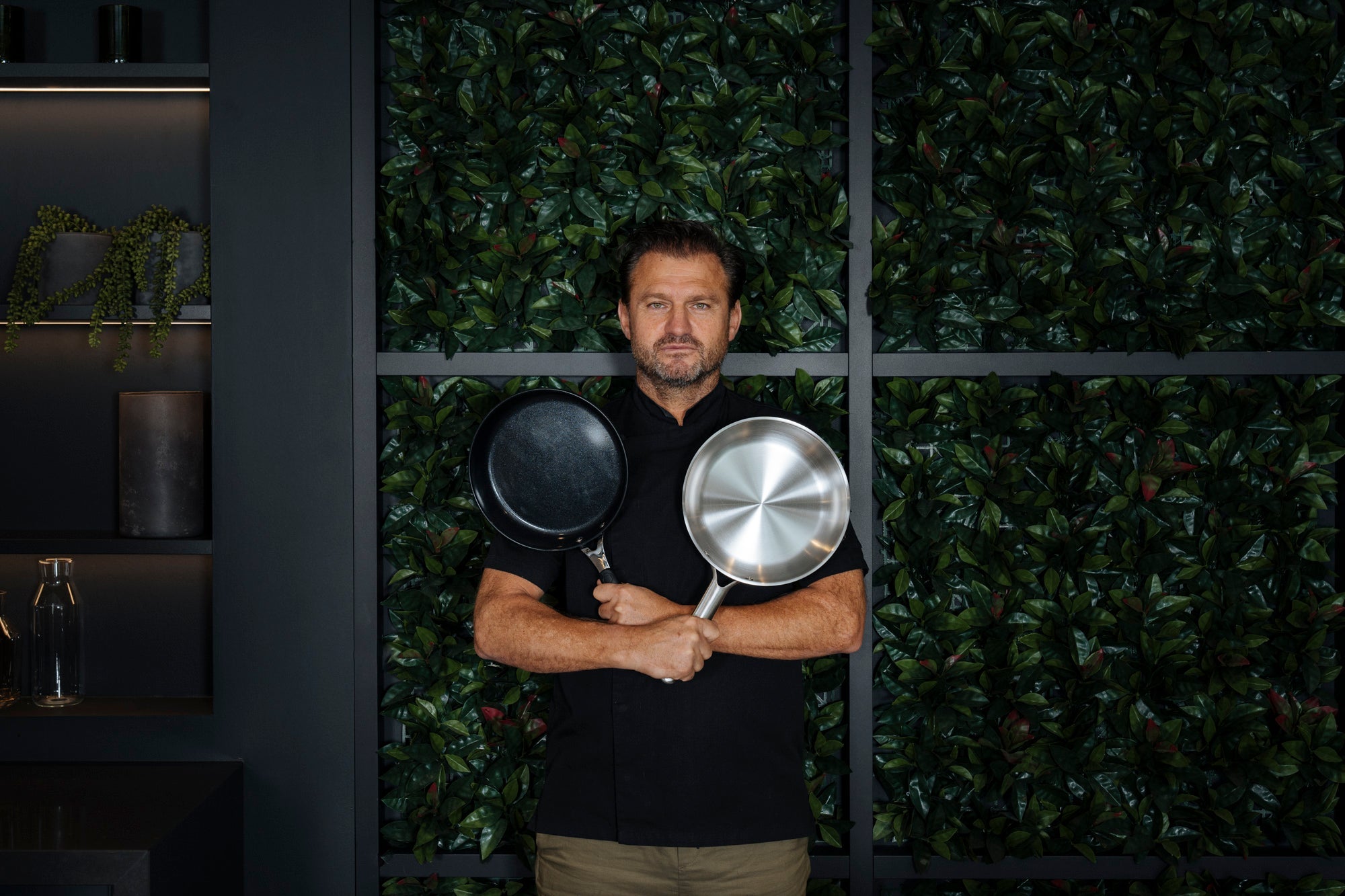
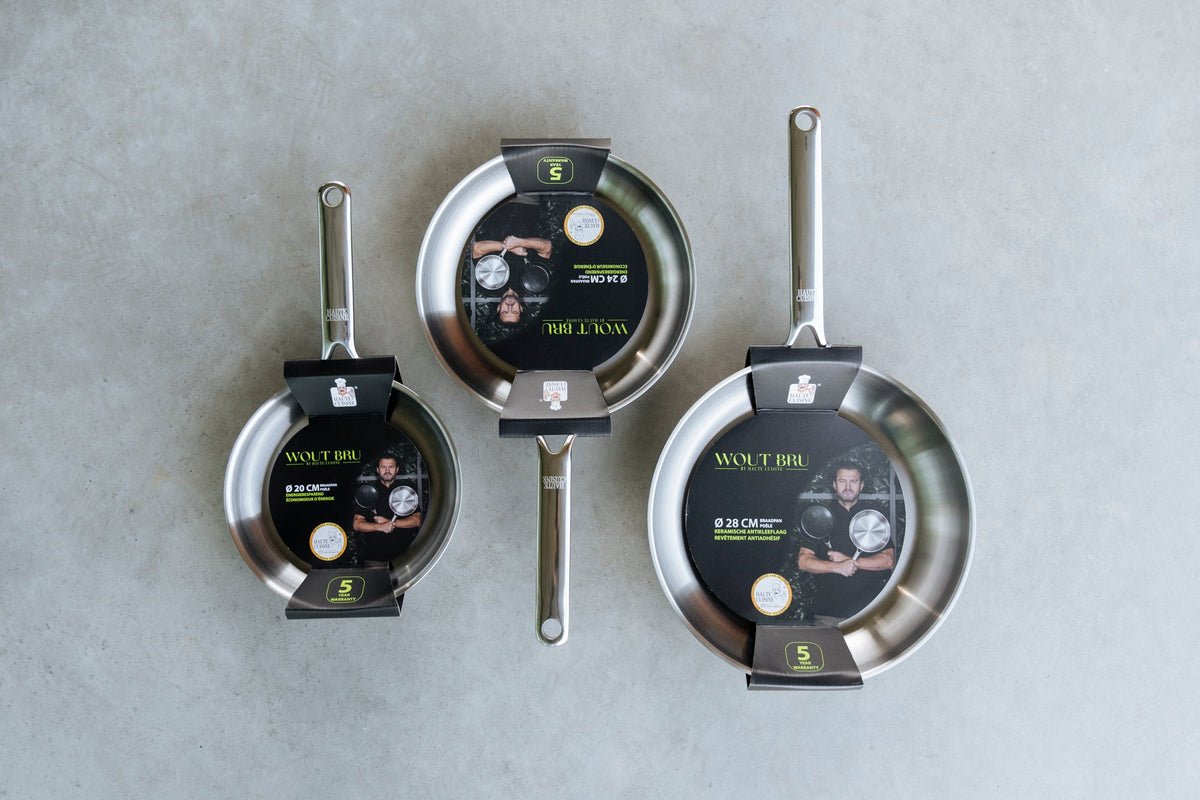
Browse our stainless steel pots and cast iron pans and cocottes, or discover the Wout Bru collection with professional 3-layer stainless steel cookware.
%20and%20cast%20iron%20are%20both%20durable,%20chemical-free%20materials%20for%20pots%20and%20pans%20%E2%80%94%20but%20they%20perform%20fundamentally%20differently.%20In%20this%20blog%20we%20outline%20the%20differences,%20so%20you%20c...)