Choosing a Stick or Non-Stick Pan?
Intro
When choosing the right frying pan, it's important to know exactly what you want to prepare. Not every pan performs the same at high or low temperatures, and certain dishes call for a specific cooking method. In this blog you'll discover the clear differences between a stick pan and a non-stick pan, so you always make the best choice for your dish.
Stick or non-stick: which pan for which dish?
Selecting the right pan starts with one question: what do I want to cook?
Stick pans are ideal for high temperatures and maximum flavour development. Non-stick pans, on the other hand, are perfect for delicate dishes that shouldn't stick. Below you'll read exactly when to use which pan.
Stick pans: for high temperatures & maximum flavour
A stick pan is best used at high temperatures. It's ideal for:
searing meat
frying ingredients golden brown and crispy
dishes where caramelization matters
Because stick pans can get very hot, you get a beautiful crust and a deep, rich flavour. The browned bits left on the bottom during cooking are also the perfect base for delicious sauces: think of fond, jus or a classic pan sauce.
Extra tip for delicate dishes
Still want to prepare a delicate item in a stick pan?
Add a bit of extra fat to prevent sticking and get a more even result.
Non-stick pans: ideal for delicate preparations
Non-stick pans perform best at medium to low heat. They're perfect for:
breaded dishes
delicate fish
eggs and omelettes
simmering and reheating
low-fat frying
With a non-stick pan you can cook worry-free without ingredients sticking. The result is often slightly less crispy than in a stick pan, but much more subtle and less risky for delicate items.
The different types of non-stick pans
Non-stick pans come in several materials, each with its own characteristics:
1. Forged aluminium
lightweight
heats up quickly
budget-friendly
2. Cast aluminium with non-stick coating
more robust than forged aluminium
excellent heat distribution
3. Pans with PTFE non-stick coating
classic non-stick layer
ideal for low to medium temperatures
gives a very smooth cooking experience
4. Ceramic non-stick pans (PFAS-free)
natural, hard coating
PFAS- and PFOA-free
ideal for low-fat cooking
can handle higher temperatures
the golden middle ground between stick and non-stick:
you cook with less fat and still get a slightly crispy result
How do you make the right choice?
Use this rule of thumb:
For meat, caramelization and a crispy crust → choose a stick pan
For delicate, low-temperature dishes → choose a non-stick pan
For a versatile middle ground → choose a ceramic non-stick pan
This way you're always guaranteed the best cooking result, without frustration or failed dishes.
Conclusion
Stick pans and non-stick pans each have their own role in the kitchen. A stick pan delivers maximum flavour and perfect crust formation at high temperatures, while a non-stick pan is ideal for delicate ingredients and low-fat cooking. With the right pan, every dish becomes easier and tastier.
Discover the range
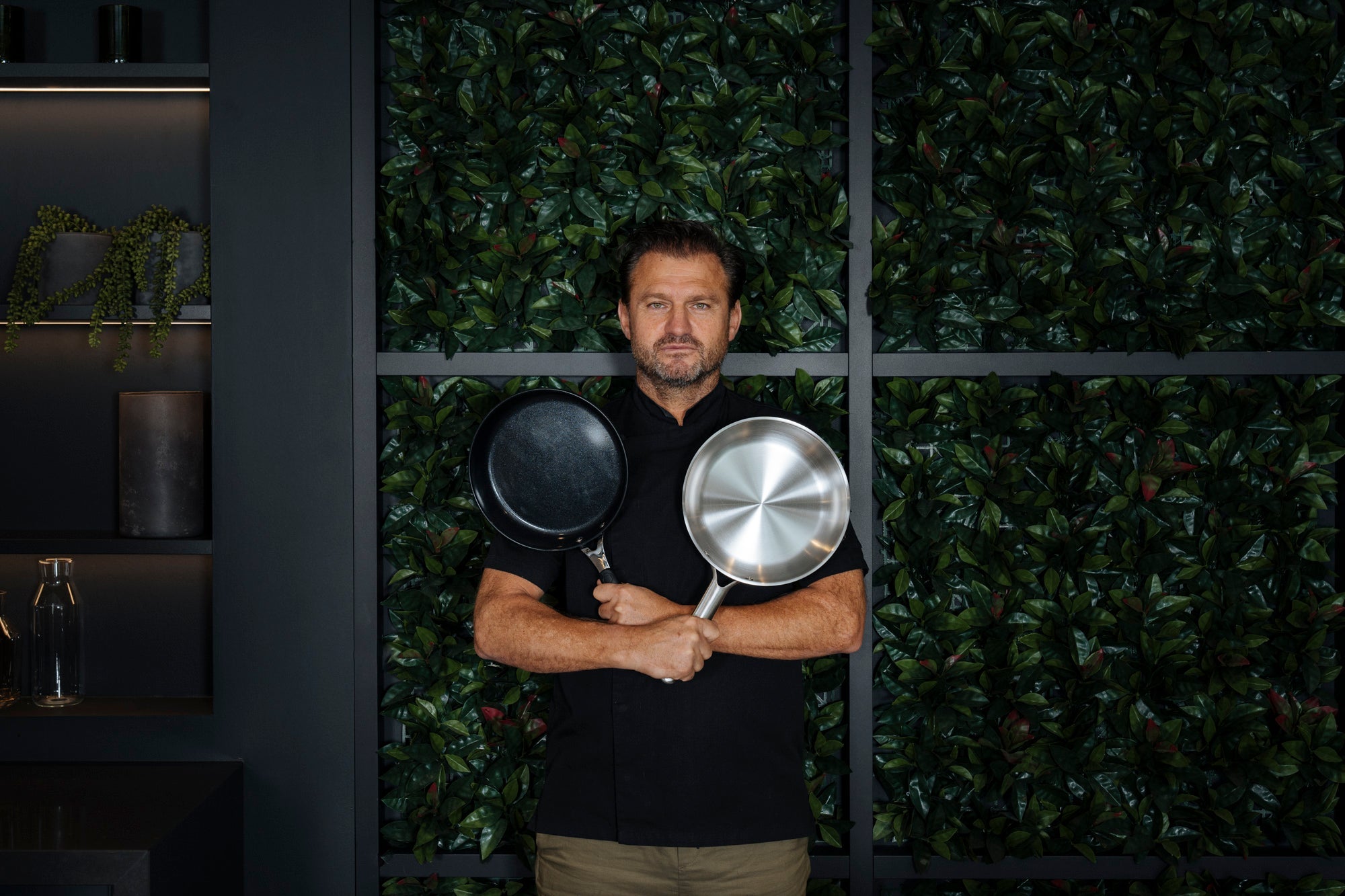
Looking for a non-stick frying pan or a classic stainless steel frying pan? Browse our full range and find the pan that suits your cooking style.