Buying Pots and Pans: The 9 Most Frequently Asked Questions
Looking for new pots or pans but not sure what to look for? You're not alone. In this guide we answer the questions we hear most often from customers who want to equip their kitchen — from "how many do I need" to "is more expensive really better". With concrete answers and links to the right cookware from our range.
- How many pans and pots do I need?
- Which size should I choose?
- Stainless steel, cast iron or ceramic: what suits me?
- Is a more expensive pan really better?
- Are all my pans suitable for induction?
- Can I use metal utensils?
- Can it go in the oven?
- Buy a set or add pieces individually?
- What makes a great cookware gift?

1. How many pans and pots do I actually need?
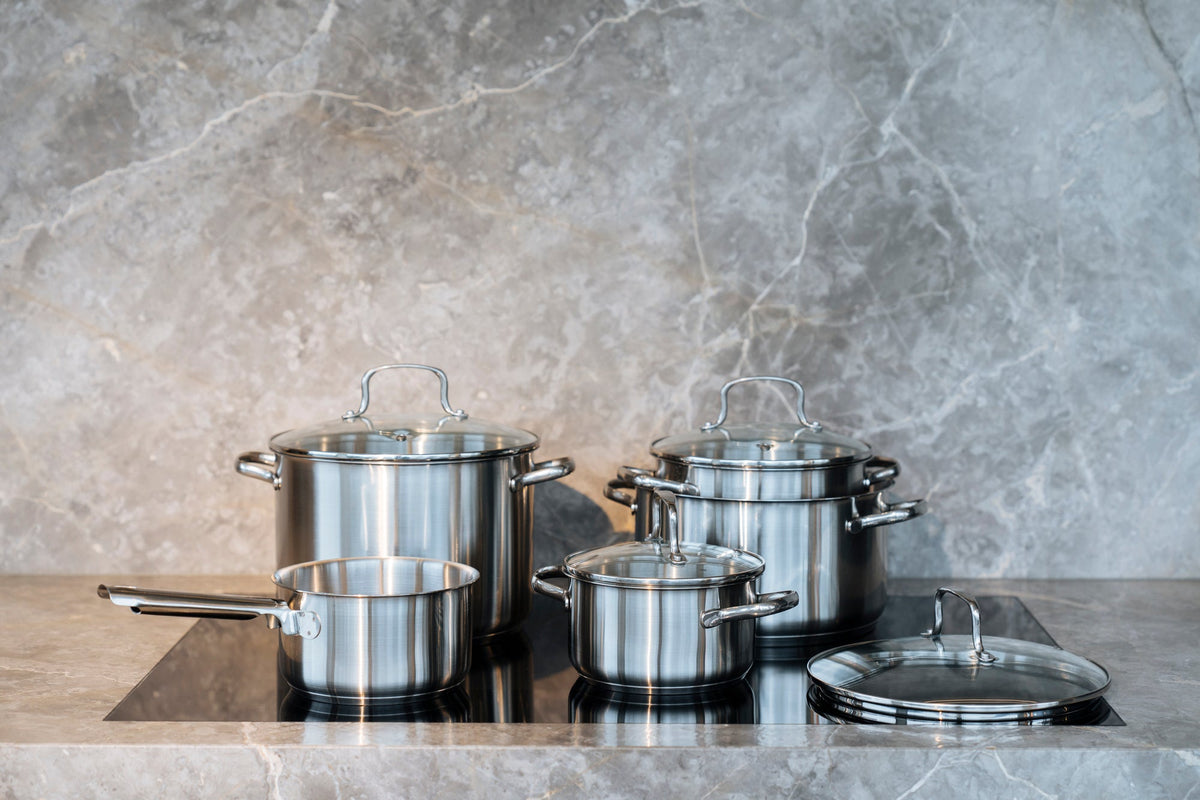
You don't need twenty pieces to cook well. With this basic set you'll get a long way:
- 1 frying pan (24–28 cm) — for meat, fish, vegetables and everyday frying
- 1 medium pot (18–20 cm) — for sauces, vegetables, smaller portions of pasta
- 1 large pot or soup pot (24 cm+) — for pasta, soup and family portions
- 1 saucepan (14–16 cm) — for sauces, warm milk or a quick egg
Want to get a complete basic set all at once? A cookware set contains exactly this combination, often more affordable than individual pieces.
2. Which size pot or pan should I choose?
The right diameter depends on what and for how many people you're cooking:
- 14–16 cm — sauces, small portions, 1 person
- 20–24 cm — the everyday workhorse, 2–4 people
- 28–32 cm — frying work, large family portions or guests
Not sure? Most of our ranges, such as the stainless steel pots and frying pans, are available in multiple sizes within the same line — so you can gradually build a matching set.

3. Stainless steel, cast iron or ceramic: what suits me?
Every material has its strength. Stainless steel is fast, hygienic and low-maintenance. Cast iron retains heat the longest and is ideal for stewing. Ceramic non-stick pans are PFAS-free and require the least fat. We break down the differences in detail in Stainless steel or cast iron: what's the difference? and Choosing a stick or non-stick pan?
4. Is a more expensive pan really better than a cheap one?
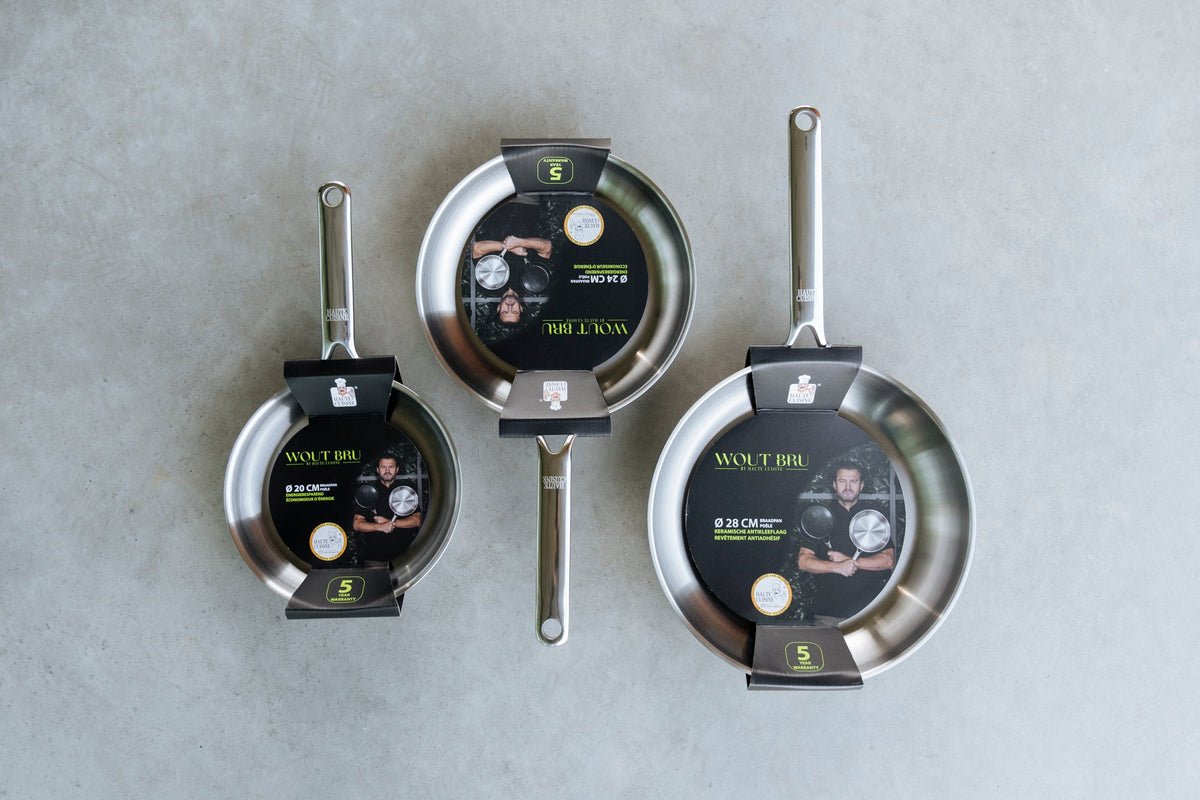
Often yes — and it comes down to the base. Entry-level models usually have a single layer of aluminium or stainless steel. Our Gastro and Wout Bru ranges use a 3-layer base (stainless steel – aluminium – 18/10 stainless steel): the aluminium core conducts heat quickly and evenly, the outer stainless steel layers provide durability. The result: no hot spots, less sticking and a pan that lasts for years. See the difference in detail on our Wout Bru page, where we compare Gastro, Essential and Signature side by side.
5. Are all my pans suitable for induction?
Not every pan works on induction — the base must be magnetic. Stainless steel and cast iron are naturally suitable; aluminium pans need a built-in induction disc. We explain it fully in Best pan for induction: what should you look for? For every product on our site, we clearly state which heat sources it's suitable for.
6. Can I use metal utensils in my pans?
- Stainless steel and cast iron: no problem, these materials withstand metal spatulas and whisks.
- Non-stick pans (ceramic or coated): avoid metal. Use wooden or silicone utensils so the non-stick layer stays scratch-free and therefore effective.
7. Can I put my pots and pans in the oven?
This varies by product. Our Wout Bru Signature ceramic non-stick pans are explicitly oven-safe up to 200°C, both pan and handle. Cast iron cocottes and stew pans are also oven-suitable. Do watch out for glass lids or pans with plastic handles: these aren't always oven-safe. Always check the specifications on the product page of the model you have in mind.
8. Buy a set or add pieces one by one?
A cookware set is the fastest and usually most affordable way to fully equip your kitchen in one go — think of the Cannes set (9 pieces) or the Bourgogne set (10 pieces). Know exactly what you're missing, for example just a larger frying pan or an extra pot? Then it's smarter to buy individual pieces within the same range, so everything matches nicely.
9. What makes a great cookware gift?
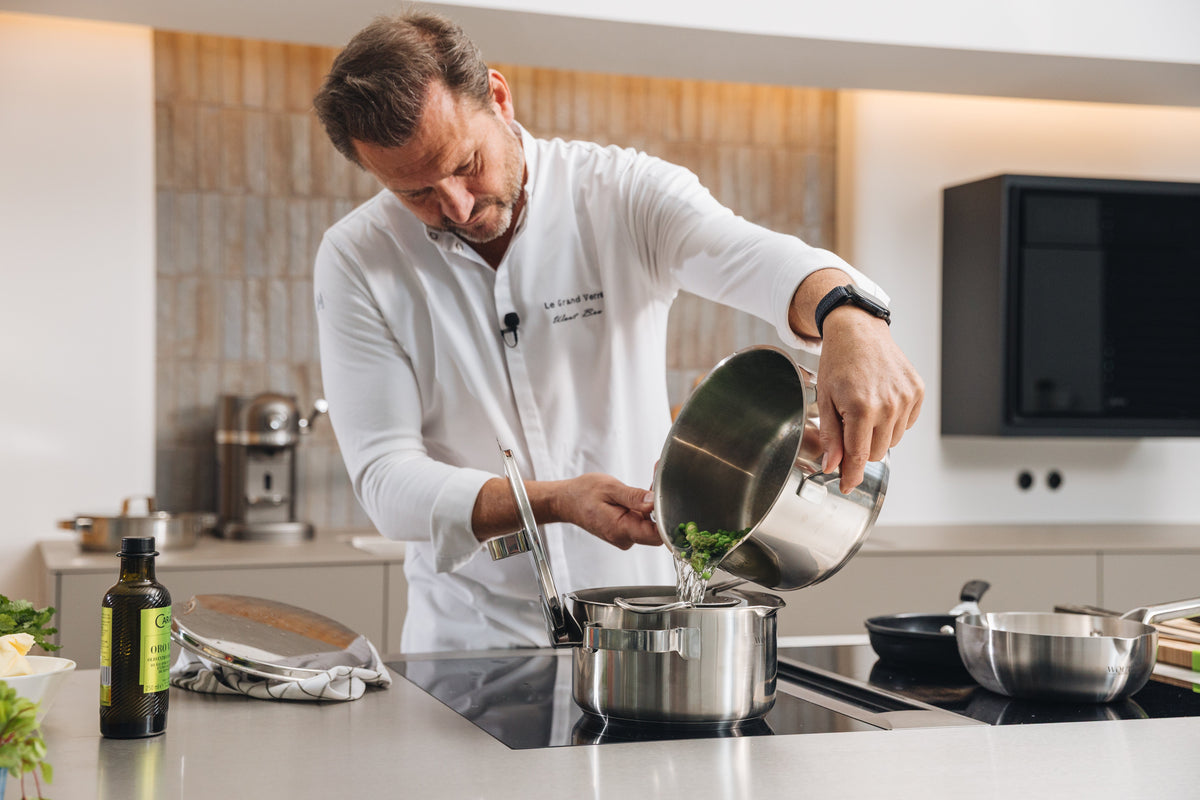
Cookware remains a gift that actually gets used. Our Wout Bru collection, developed in collaboration with the celebrity chef, is a popular choice for this — with the PFAS-free ceramic non-stick pan as the crowd favourite. Still unsure about the right size or model? A Haute Cuisine gift voucher lets the recipient choose for themselves.

Conclusion
With the right basics, the right size and material that suits your cooking style, you'll get a long way. Still unsure? Browse our full range of pans and pots, or get in touch via our contact page — we're happy to help.